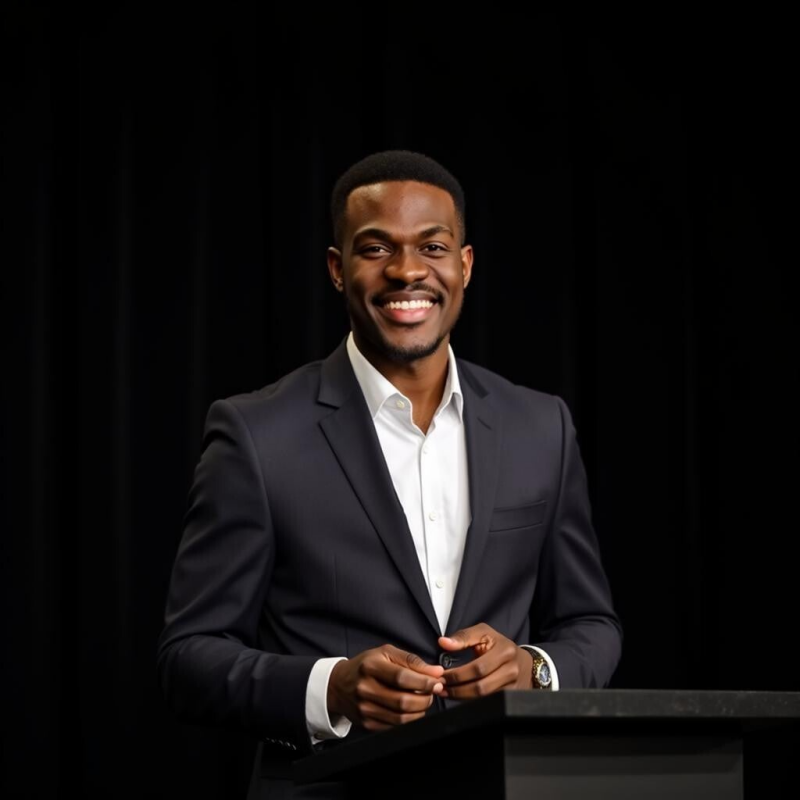
About me

I’m Abissi Jesus Lazare Désiré Dibi, a quant with a strong background in applied mathematics and finance. I studied at École Polytechnique and ENSAE Paris, where I built expertise in random modeling, data analysis, and algorithmic trading. My experience at Axa-IM and Scientific Beta allowed me to apply advanced statistical and machine learning methods to real market problems, from transaction cost modeling to regime-adaptive prediction. I’m passionate about using mathematics, programming, and data-driven research to design and test systematic trading strategies that perform robustly under changing market conditions.

Undergraduate and graduate academic background

  • Graduated from ENSAE Paris
  • Ecole Polytechnique(l'X): L and M in Applied Mathematics, Economics and Computer Science.
  • Preparatory Classes (MPSI/MP*) – Mathematics and Physics
  • A-Level Equivalent Studies – Mathematics and Physics

Experience

  • Oct 2024 – Oct 2025: Quantitative researcher apprentice within the QIS team of Multi Asset and Quant Solutions of AXA Investment Managers and under the supervision of M. Thomas Raffinot.

  • Apr 2024 -  Sept 2024: Quantitative researcher intern within the research team of Scientific Beta and under the supervision of M. Félix Goltz and M. Mikheil Esakhia.

  • Jan 2023 - Jul 2023:  Quantitative Risk Intern within the risk desk of Galilée Asset management. I was under the supervision of M. Pablos Campos.

Training and Engagement

  • Hull Tactical - Market Prediction (kaggle challenge)
  • 2025 Morgan Stanley Hackathon - France
  • Algo Trade Hackathon 2025 - Zagreb, Croatie
  • Tradetech FX Europe 2025 - Barcelona, Spain
  • Hi! PARIS DATA BOOTCAMP 2022


Selected Work

VIX Forecast

As part of the course Machine Learning for Portfolio Management taught by M. Sylvain Champonnois, I developed a research project exploring new hypotheses on the predictability of the VIX. The central question was: Can we forecast VIX movements using machine learning techniques?

To test this, I built predictive models and backtested them to validate their performance. The dataset combined both traditional and alternative sources of information, including:

Macroeconomic factors

Interest rate variables

Sentiment analysis indicators

This multi-faceted data approach aimed to capture a richer view of market dynamics and improve predictive accuracy. The full implementation and results of this project are available on my GitHub repository.

Pairs trading modelling

As part of the Enseignement d'Approfondissement project at École Polytechnique, under the supervision of M. Claudio Fontana, I developed and numerically simulated two variants of a pairs trading strategy, analyzing their performance both in the presence and absence of regime shifts.

The spread between assets was modeled using an Ornstein–Uhlenbeck process, and the simulations focused on evaluating key performance metrics such as:

  • PnL (Profit and Loss)

  • Sharpe Ratio

  • Maximum Drawdown

This work provided insights into how regime changes affect the robustness and risk-return profile of pairs trading strategies.

The full implementation and results of this project are available on my GitHub repository.

Algorithmic trading: Optimal Execution

As part of the Enseignement d’Approfondissement course at École Polytechnique, under the supervision of M. Mathieu Rosenbaum, I studied and replicated the seminal work of Almgren and Chriss, Optimal Execution of Portfolio Transactions with Market Impact.

The project focused on analyzing the theoretical framework of optimal trade execution in the presence of both temporary and permanent market impact, and implementing numerical simulations to replicate and validate the results of the article.

The full implementation and results of this project are available on my GitHub repository.

Volatility estimation in the presence of microstructure noise

As part of the Enseignement d’Approfondissement course at École Polytechnique, I studied academic papers addressing the estimation of realized volatility in the presence of market microstructure noise. In particular, I focused on the seminal article “A Tale of Two Time Scales: Determining Integrated Volatility with Noisy High-Frequency Data” by Lan Zhang, Per A. Mykland, and Yacine Aït-Sahalia.

The project involved implementing and testing the convergence of the estimators proposed in the paper, assessing their performance in realistic high-frequency data settings.


VOLATILITY ESTIMATION UNDER ENDOGENOUS
MICROSTRUCTURE NOISE
By Christian Y. Robert and Mathieu Rosenbaum

Deep learning in asset pricing

bid/ask spread estimation from no intraday data

Numerical methods for black scholes pde equation solving in the presence of gamma constrained

Autocallables pricing using local volatility model

Créez votre propre site internet avec Webador